Has social media democratized truth by giving everyone a voice, or distorted it by blurring the line between fact and opinion?
If I were asked the same question a decade ago, I would have answered that social media brought us voices to democratize truth. I still agree with it to some degree, notwithstanding that my opinion has leaned toward the latter statement.
In this essay, I’ll argue how I think the use of social media has changed in recent years.
First of all, in the early stages of social media, it was merely used for sharing moments from users’ daily lives, such as a photo of flowers they found on the way, a cute moment of their dogs/cats, an idea, or what they were craving at the moment.
As more industries expanded and the number of users grew, each platform’s specifications diversified. In recent years, social media has become a search engine among young users.
The study conducted by BBC Education found that “nearly half of the people between the ages of 11 and 16 tend to believe the news they see on social media, often regardless of the source.”
In addition to this, Meta (a tech company that operates several social media platforms) announced the end of the third-party fact-checking system a while ago. This certainly has spurred the distortion of truth, since people who label themselves as experts in every category have been disseminating their own beliefs on social media.
Secondly, algorithms work according to our desire. It’s not hard to discover information that reinforces one’s beliefs, whether the content is fact or not. As a result of a single word search, social media offers us content continuously, like a waterfall.
Eco chambers are a consequence of algorithms that significantly contribute to reinforcing one’s desirable beliefs and have simultaneously become a barricade against diverse perspectives.
This is supported in the article by Petter Törnberg, P(2018). “It finds an ‘echo chamber effect’: the presence of an opinion and network polarized cluster of nodes in a network contributes to the diffusion of complex contagions, and there is a synergetic effect between opinion and network polarization on the viral spread of misinformation.”
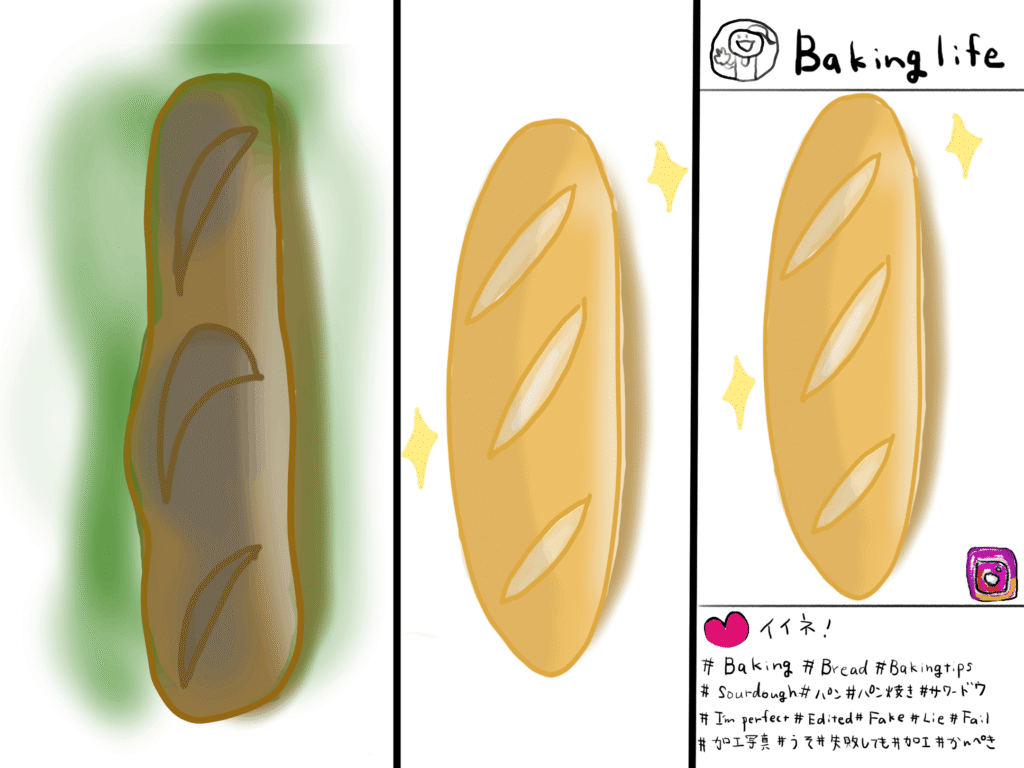
More importantly, even politicians utilize it to consolidate their position. For instance, they tweak their statements and actions to cater to certain supporters of extreme demands or movements and conveniently edit videos to influence their opponents’ impressions. Even worse, they fall into echo chamber traps.
On the plus side, it’s undeniable that social media gives us a voice. To illustrate this, live streaming has allowed us to instantly access unfiltered footage from other continents, such as natural disasters and ongoing protests.
Additionally, social media offers a place for everyone, including people who struggle with finding confidence in real life or have difficulty communicating verbally.
However, without legal policy and regulation, it only exacerbates the distortion of truth and casts a shadow over its excellent premise.
In conclusion, while it’s a fact that social media significantly contributes to positive movements and gives anyone a voice to fight against their hardships. On the other hand, tragically, it has become a prolific scene of blurred facts and opinions.
ソーシャルメディアは人々に発言権を与えることで真実を平等化しているのか、それとも事実と意見の境界線を曖昧にすることで事実を捻じ曲げているのか。
もし私が10年前に同じ質問をされたなら、ソーシャルメディアは真実を平等化するための声を私達にもたらしたのだ、と答えただろう。今でもある程度はその意見に賛成であるにもかかわらず、私の意見は後者へと傾きつつある。このエッセイでは、近年におけるソーシャルメディアの使われ方により私の考えがいかに変化したかを議論していく。
まず第一に、当初のソーシャルメディアは利用者が日常の些細な事、例えば道端で見つけた花、飼い犬や猫たちの可愛い瞬間、アイデアまたは彼らが今何を切望しているかなどを他者と共有するために使われていたに過ぎなかった。
企業がその規模を広げ、利用者が増加するにつれ、それぞれのプラットフォームの仕様は多様化した。近年では、若者の間ではソーシャルメディアは検索エンジンと化している。
BBC放送の教育サービスが実施した調査によると「11歳から16歳の半数以上が、ソーシャルメディアで目にした情報を、情報源が何であるかに関わらず信じる傾向にある」。ということが判明した。
さらに、複数のソーシャルメディアを運営するテクノロジー企業Metaは第三者によるファクトチェックシステムの終了をしばらく前に発表した。あらゆる分野で自らを専門家と自称する人々が独自の信念を事実として広めている状況において、この発表は確実に事実の歪曲を拍車をかけた。
第二に、アルゴリズムは私たちの欲求により機能している。配信されている内容が事実であろうとなかろうと、独自の信念を強固にする情報を見つけることは難しいことではない。ほんのひとつの言葉の検索結果として、ソーシャルメディアは私達に終わりのない、まるで滝のようにコンテンツを提供し続けるのだ。
エコーチェンバー現象は自らの求める信念を強化させることに大いに貢献するアルゴリズムの結果であると同時に、多様な視点から目を背けるための障害物となっている。
これは、Petter Törnberg, P(2018)の論文でも裏付けられている。「エコーチェンバー効果の発見:ネットワーク内に存在する意見と二極化したノードのクラスターは、複雑な伝染の拡散に寄与し、意見二極化とネットワーク二極化の間には誤情報拡散に相乗効果をもたらす」。
さらに重要なのは、政治家が自分の立場を強化するためにこれを利用しているということだ。例えば、彼らは特定過激派支援者や運動の要求に応えるため自らの発言や行動に微調整を加え、対候補者の印象に影響を与えるため自らに都合の良いよう動画を編集する。さらに悪い事に、彼ら自身もエコーチェンバーの罠に陥り得るのだ。
良い点として、ソーシャルメディアが私たちに発言する声を与えてくれたことは否定できない。例えば、ライブ配信サービスは、他の大陸で起きている自然災害や進行中の抗議活動など未編集動画に瞬時にアクセスすることを可能にした。
さらにソーシャルメディアは実生活で自信が持てず苦悩している人々や、言葉でのコミュニケーションが難しい人々など、すべての人に居場所を与えてくれる。しかし、法的政策や規制なしでは真実の歪曲を悪化させるのみで、その優れた前提となる理念に影を落とすだろう。
結論として、ソーシャルメディアが前向きな運動に大いに貢献していること、そして人々に困難と戦うための発言権を与えていることは事実だ。しかし一方で、曖昧にされた事実や、個人的な意見が蔓延する場となっている事実は悲劇である。
https://doi.org/10.1371/journal.pone.0203958
*引用部分は難解だったので翻訳使用